


What You’ll Learn:
- The three standard die box sizes Babcock produced and how size affects demand
- The construction details that separate a genuine Babcock from a lookalike
- How to read the hallmark to help place a piece in his production timeline
- Wood and finish variations that carry a premium with collectors
- What buyers should inspect before paying collector prices
📅 Updated: August
✍️ Author Expertise: Magic Trick Collector, Curator, and Steward of History
The Maker Behind the Die Box
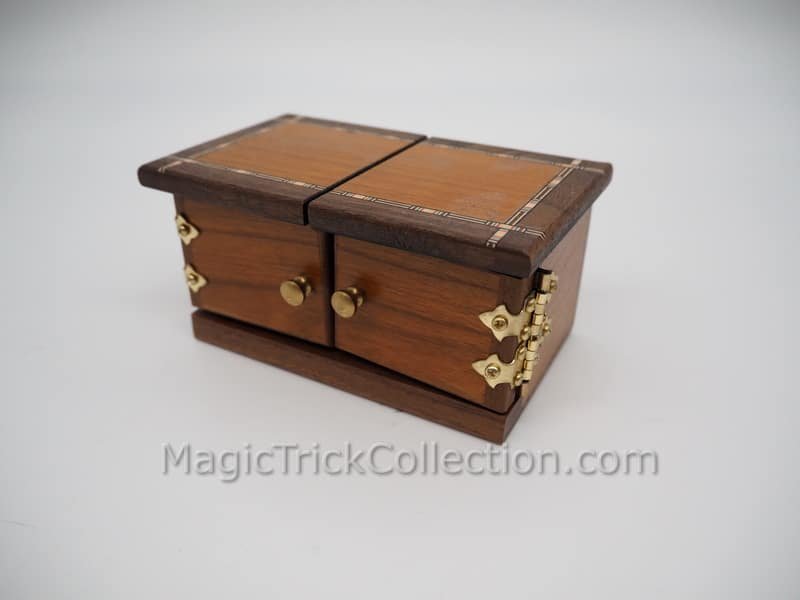
Mel Babcock built his reputation on a single classic effect: the die box. A die vanishes from a two-compartment box and reappears somewhere it has no business being. It’s one of the oldest structures in magic. What Babcock did differently was refuse to treat the box as disposable. Every one he built came out of exotic hardwood, fitted with solid brass hardware, and finished with the kind of joinery you’d expect from furniture, not a prop.
That standard didn’t come from a magic supply catalog. Babcock was a third-generation orchardist from Cashmere, Washington, who taught himself woodworking out of necessity, building his own props on a tight budget in the 1950s and 60s while running club and banquet shows. His workshop was a converted fruit storage building on his family’s pear orchard. When a Seattle magic dealer started ordering “used-looking” props from him in bulk, word spread, and by the late 1980s Babcock left the orchard business entirely to build magic full time.
He kept building until his retirement in 2023. That closes the book on new production. Every Babcock die box in circulation now is a fixed, non-restockable body of work, which is the single biggest thing to understand before you start collecting them.
The Three Standard Sizes
Babcock built his die boxes in three sizes, and size is usually the first thing a collector notices and the first thing that affects price:
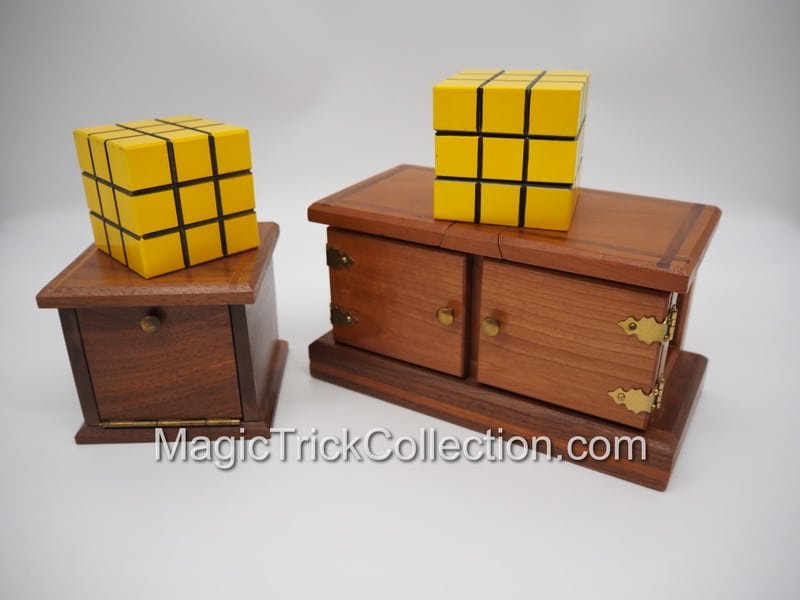
- Giant (4″): The largest and most visually commanding version, built for stage distance.
- Large (3″): The most common size in circulation and a strong middle ground for both display and close-quarters performance.
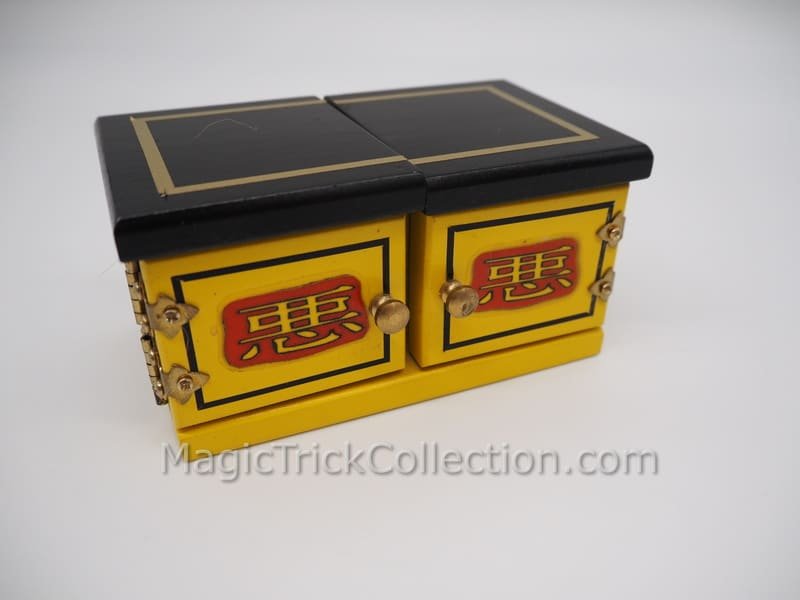
- Small / Mini (2.5″): The strongest appreciating size since Babcock’s retirement — his miniature versions of full-size and stage props have sold for as much as 4x original price, ahead of the broader catalog’s 2x to 3x gains.
Don’t assume bigger means more valuable. As a longtime Babcock collector, I’ve watched his miniature versions of full-size and stage props become the strongest performers in the secondary market since his 2023 retirement — some examples now selling for as much as 4x their original price, outpacing the roughly 2x to 3x appreciation I’ve seen across his catalog broadly. The Mini die box benefits directly from that trend: it carries every construction detail of the larger sizes in a compact, display-friendly footprint, which is exactly the combination collectors are paying a premium for.
What a Genuine Babcock Die Box Has
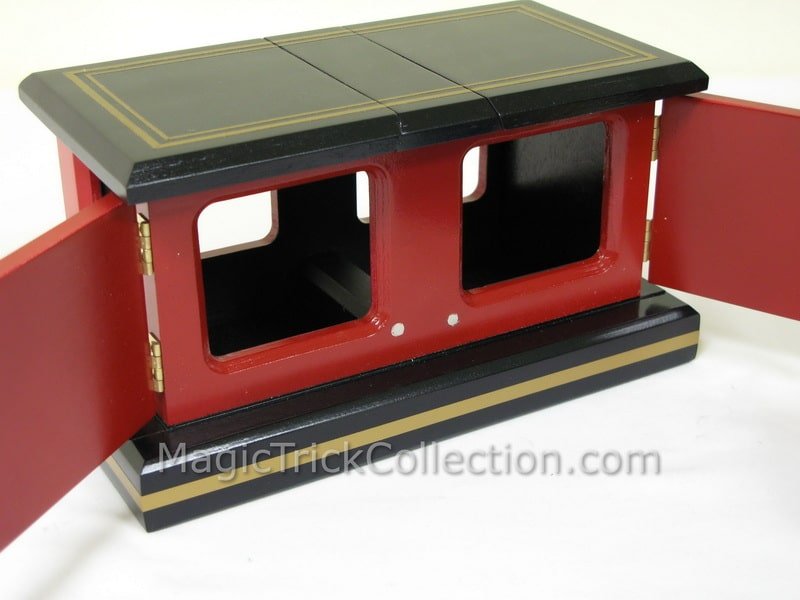
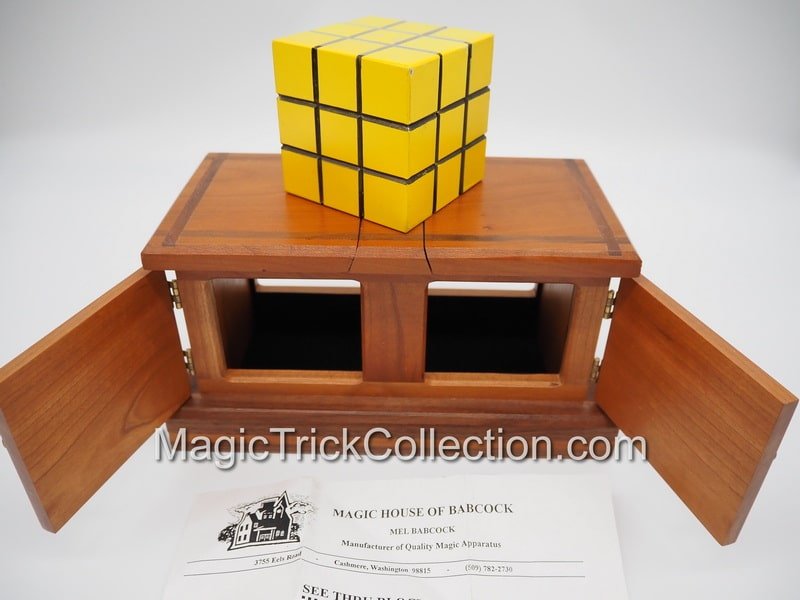
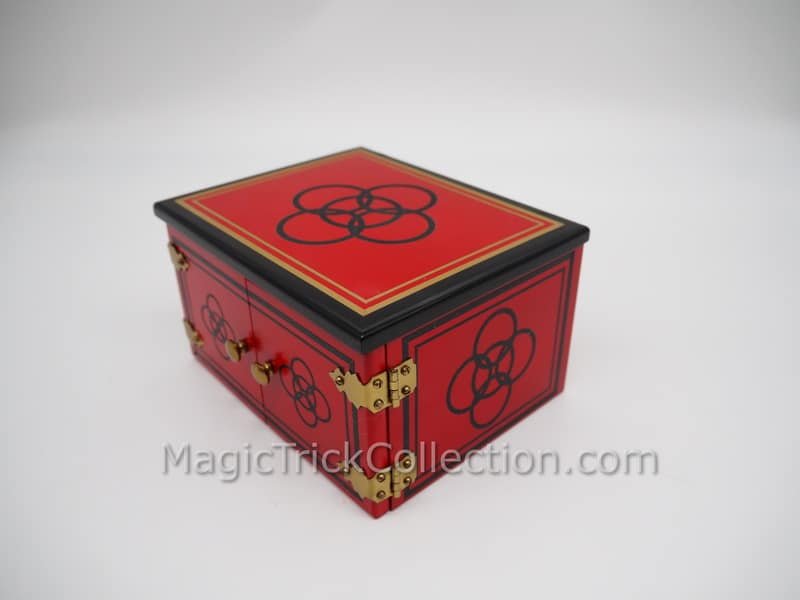
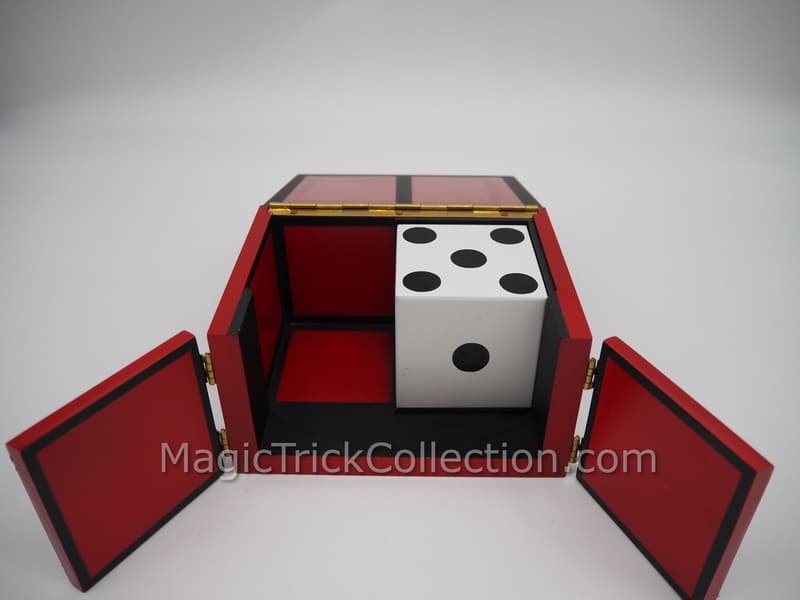
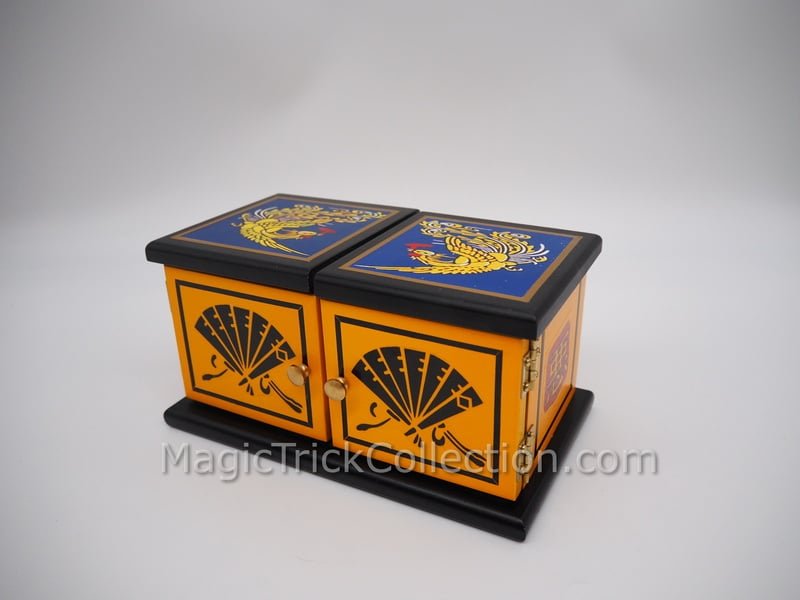
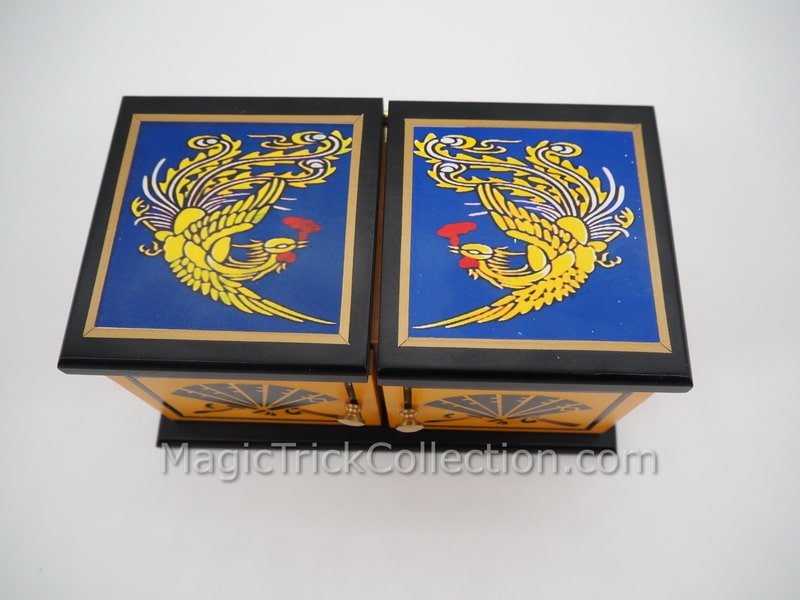
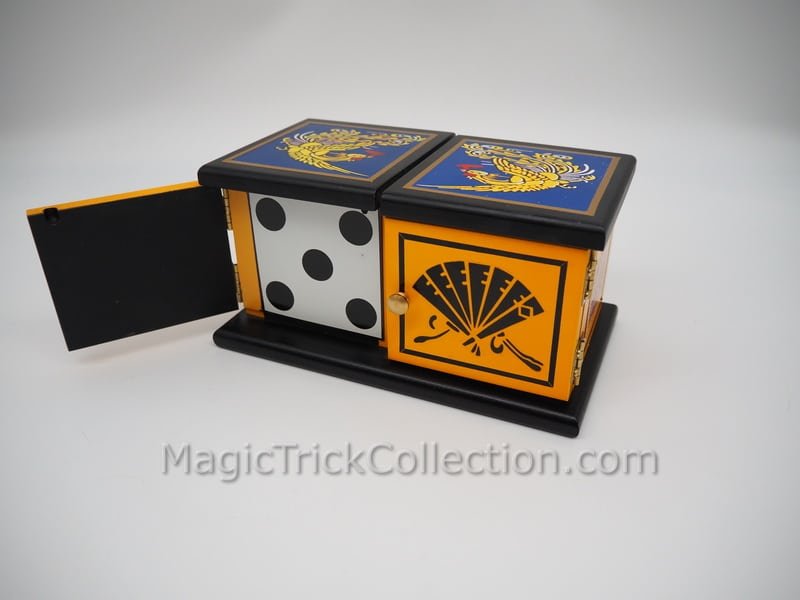
Babcock’s boxes share a consistent construction signature across sizes and wood choices. Look for:
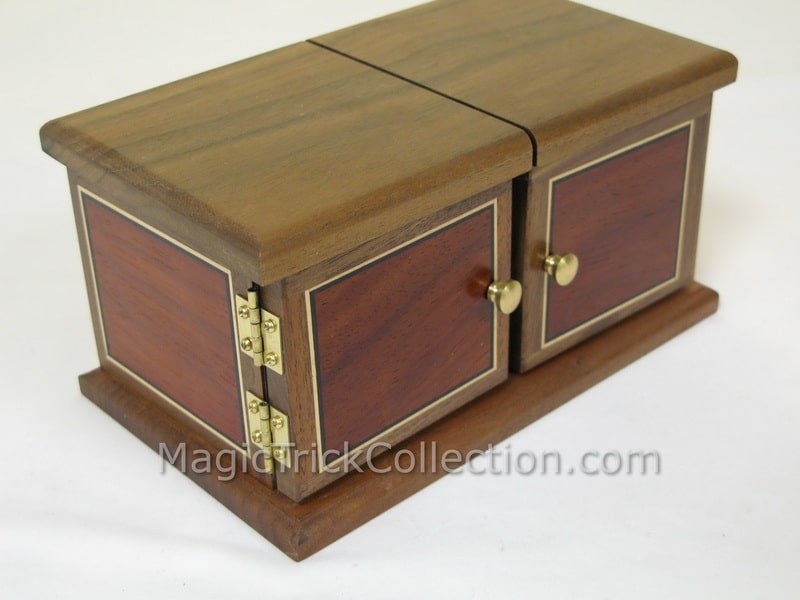
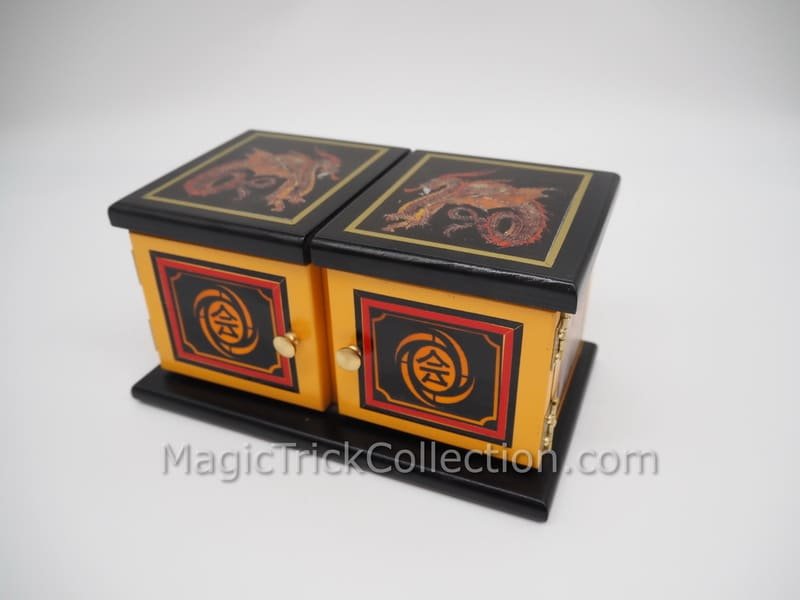
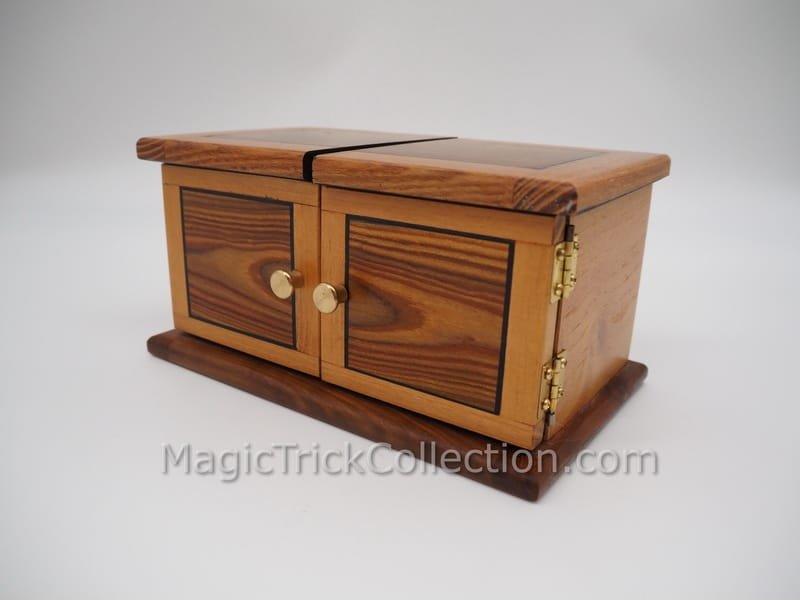
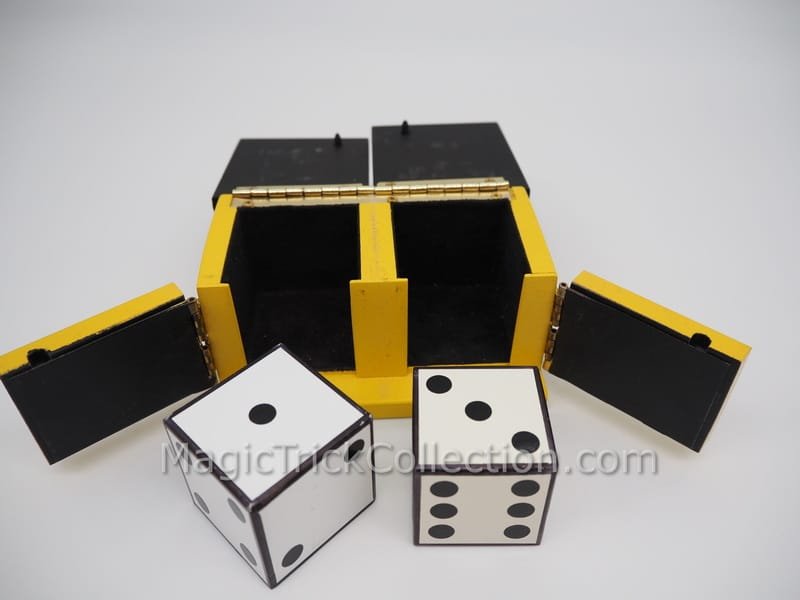
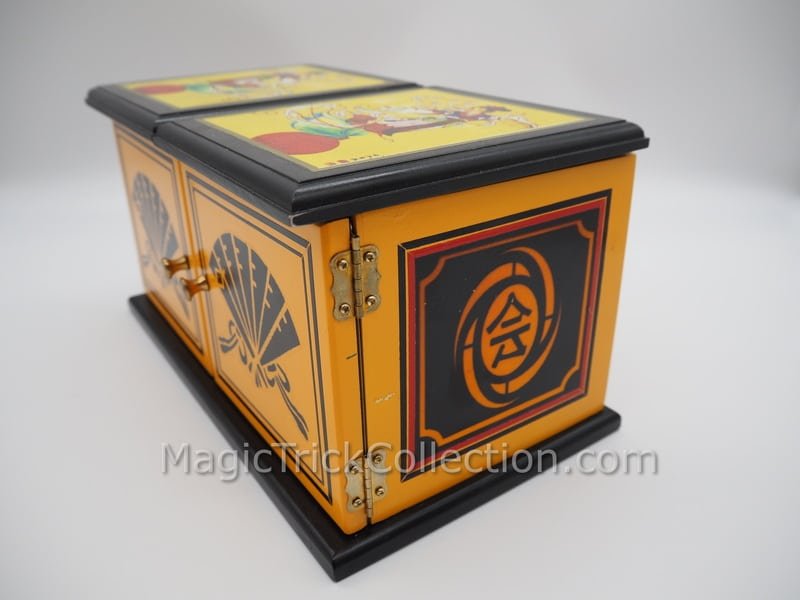
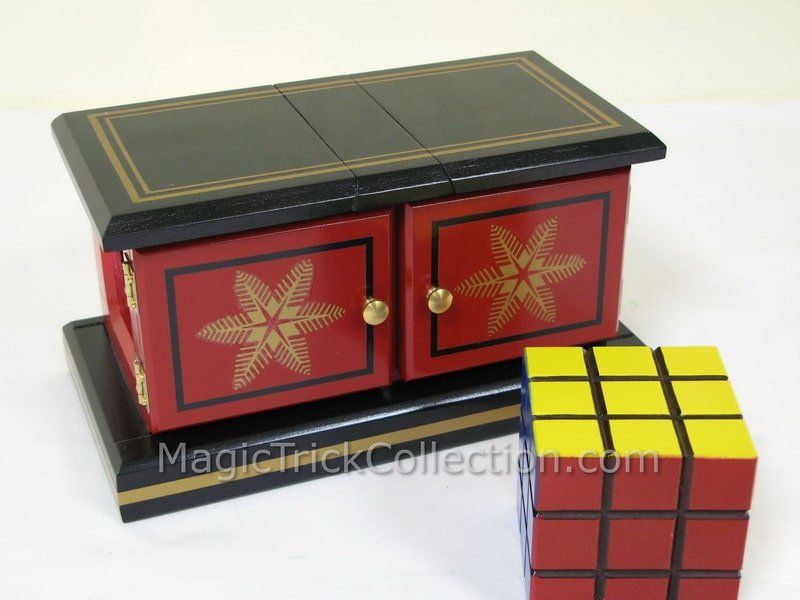
- Solid brass hardware — hinges, latches, and hasps in brass, not painted or plated substitutes
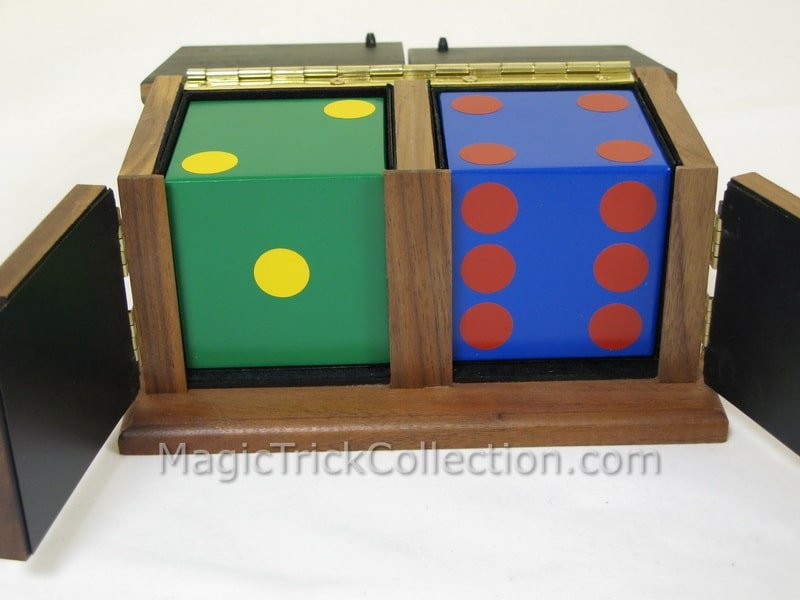
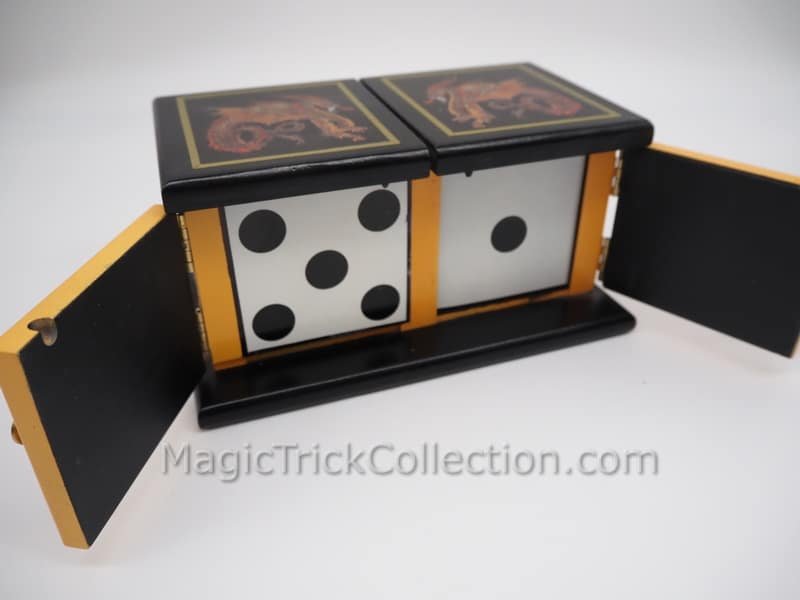
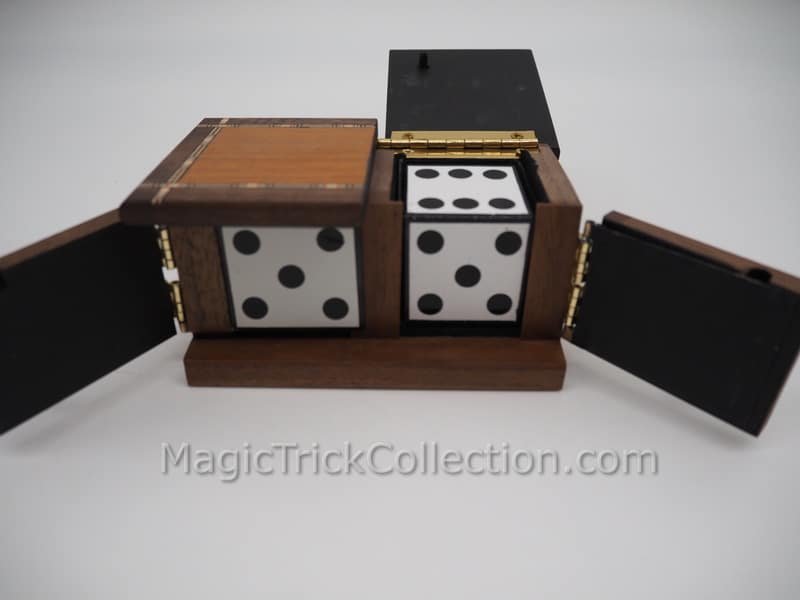
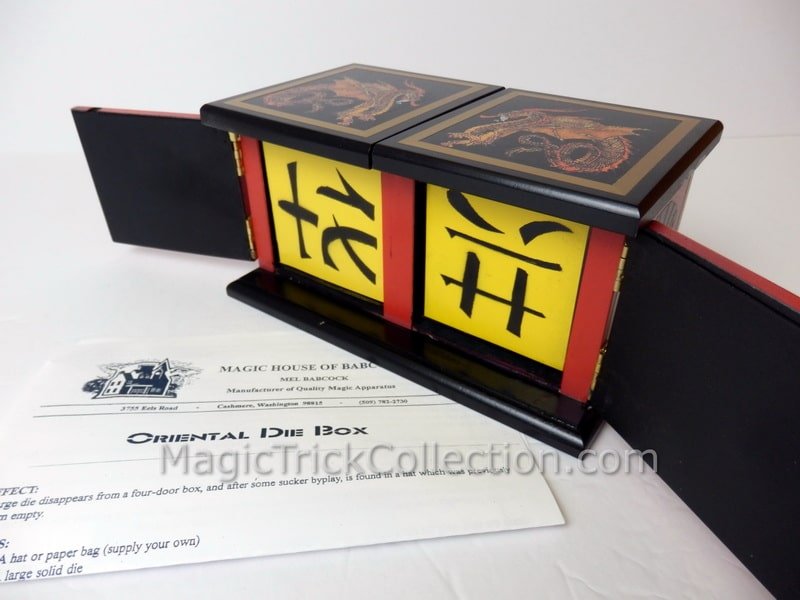
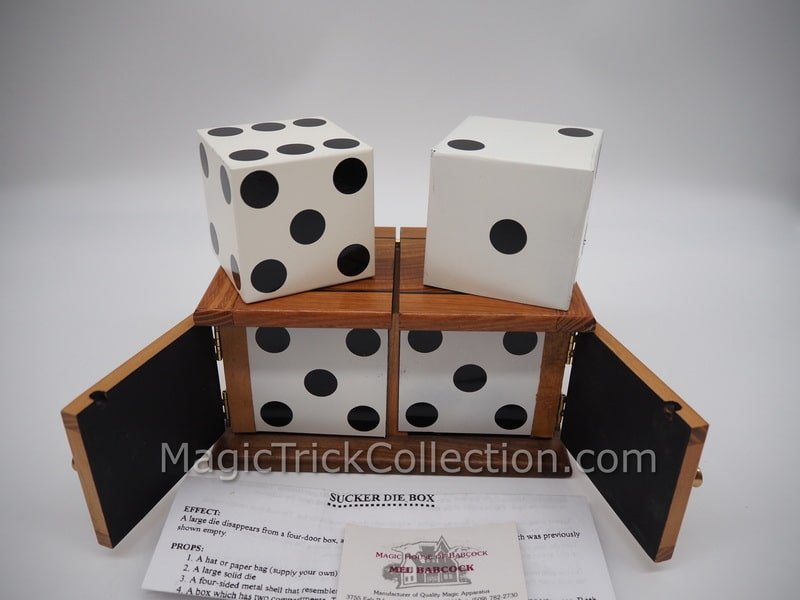
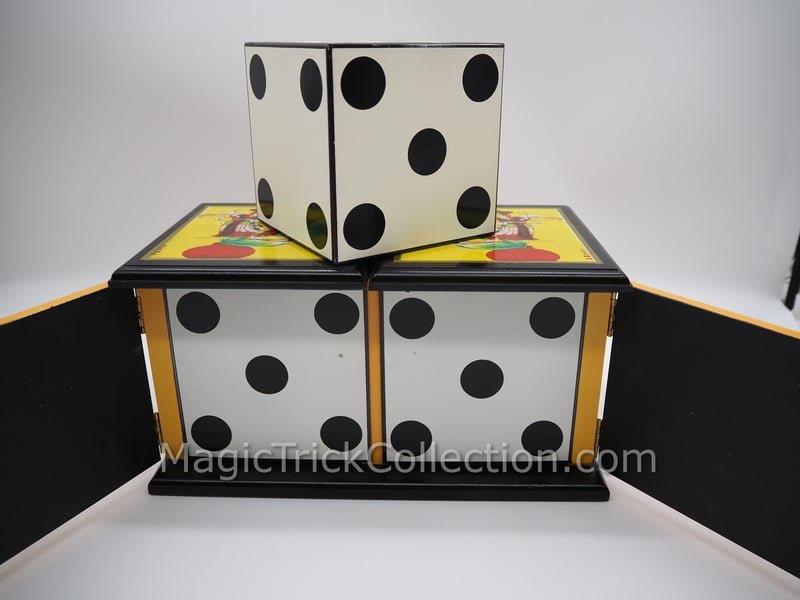
- Magnetic double fake doors on both front openings, controlled so the die can be shown on either side
- Velveteen interior lining, soft and thin, not carpet-style padding
- An audible “clunk” when the box is tilted — a weighted sliding mechanism that’s part of the sucker effect and a hallmark of the build quality Babcock was known for
- Tight, furniture-grade joinery — mitered or dovetailed corners with minimal visible gap, not butt joints and glue
If a “Babcock” die box you’re evaluating has plywood construction, visible screws instead of hidden joinery, or hardware that isn’t brass, treat it as a red flag and ask the seller directly about provenance.
Reading the Hallmark
Authentic pieces carry one of two marks on the underside or interior of the box:
- The “House of Babcock” logo hallmark, used on the majority of his production run
- Mel’s initials alone, without the full logo, which dealers who’ve handled his estate work generally treat as a signal of earlier production
Neither mark is dated, so treat the hallmark as a rough placement tool rather than a precise timestamp. If you’re trying to date a specific piece more accurately, cross-reference the wood and finish against known production periods (see below) and, where possible, against photographs in The Magic House of Babcock by Michael S. Richman (2003), the only published reference on his work.
Wood and Finish: Where the Premium Lives
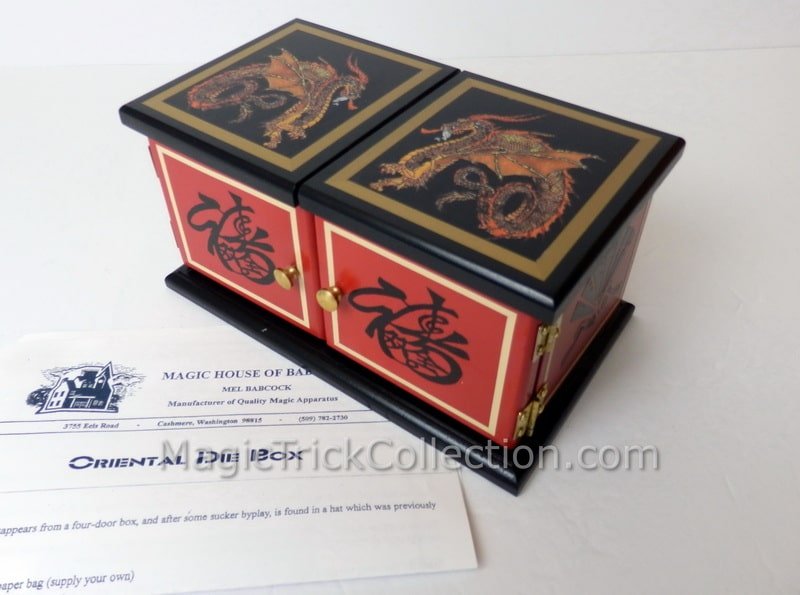
Babcock didn’t standardize his wood choices, and that’s a feature for collectors, not a complication. Documented examples include American Black Walnut, English Walnut, Padauk, Rosewood, Mahogany, and mixed-wood inlay work combining contrasting panels on the same box. A chainsaw mill he acquired in the early 1980s gave him access to free shade-tree lumber — walnut, apple, Russian olive — that isn’t available through standard commercial channels, and pieces built from that reclaimed stock are genuinely one-of-a-kind in grain and color.
When evaluating a piece, wood rarity and figure (grain pattern) matter as much as size. A Mini die box in a distinctive inlaid walnut can outvalue a Large box in a plainer finish. If two pieces are otherwise equal in condition and size, the one with visible inlay, contrasting wood panels, or unusual figure is the one worth paying more for.
Condition Checklist Before You Buy
Because no new units are coming, condition issues are permanent liabilities, not repairable inconveniences in the way they might be with mass-manufactured props. Before buying:
- Test that both magnetic fake doors operate smoothly and hold correctly — sluggish magnets are a common age-related fault
- Confirm the weighted “clunk” mechanism still functions and produces a clean, audible sound, not a rattle
- Check brass hardware for pitting or replacement parts that don’t match the original finish
- Inspect joinery for separation or glue failure, especially at corners and hinge points
- Ask whether the box retains its original velveteen lining or has been re-lined, which affects both authenticity and value
A working, cosmetically clean example will always outperform a case-only “display piece” in resale liquidity, even if the display piece looks more dramatic in photos.
How Babcock Compares to Other Die Box Makers
Babcock wasn’t the only builder known for fine die boxes, and collectors researching his work often end up comparing it to Owen Magic Supreme, another maker associated with premium wood construction and brass fittings. The two are frequently mentioned in the same breath by longtime performers: Owen’s 3″ die box is often cited for its walnut joinery and matte black interior finish, while Babcock’s is more often praised for weight, sound, and the mechanical feel of the sliding sucker action. Neither comparison makes one maker’s work more “authentic” than the other — they represent two different craftsmanship traditions working the same effect. What it does mean for you as a buyer is that if you’re building a collection around fine wooden die boxes generally, Babcock and Owen pieces displayed side by side tell a more complete story than either maker alone.
This matters practically, too: don’t assume every well-made wooden die box on the market is a Babcock. Confirm the hallmark before paying a Babcock premium for a piece that may be Owen, Abbott’s, or another maker’s comparable work.
Where Babcock Die Boxes Turn Up
Since production has ended, Mel Babcock Die Boxes surface through three main channels: estate sales and collections being sold off by longtime owners, dealer inventory from shops that carried his work while he was active, and auction listings, where prices can vary significantly based on how well the listing documents size, wood, and condition. Because there’s no manufacturer to verify a piece against, a documented provenance — a prior dealer invoice, a photograph from Mel’s own site, or a match against the Richman book — carries real weight if you plan to resell later or simply want confidence in what you’re adding to a collection.
Caring for a Babcock Die Box
Babcock built these to be used, not just displayed, and that working-mechanism design means care has to protect function as well as finish. A few points specific to his construction:
- Don’t oil or wax the magnetic door mechanisms. Lubricant attracts dust and can weaken magnetic hold over time. If a door feels sluggish, the fix is usually a gentle cleaning, not oil.
- Keep the sliding weight mechanism dry. Humidity swings are the most common cause of a “clunk” that turns into a rattle or a stick, since the weight rides in a wood channel with tight tolerances.
- Store away from direct sunlight and heating vents. Exotic hardwoods and the brass hardware Babcock favored both react to temperature and humidity swings — wood can warp at the joinery, and brass can develop uneven patina.
- Avoid modern polyurethane refinishing. If a box needs cosmetic attention, use a conservator familiar with vintage magic apparatus rather than a general furniture refinisher. Refinishing with the wrong product can both reduce collector value and interfere with how the magnetic doors seat.
If you’re deciding whether a piece needs restoration at all, the general rule with any collectible apparatus applies here too: a working original with light cosmetic wear almost always holds more value than a heavily restored piece that looks new but has lost original material.
Buying With Confidence
Mel Babcock Die Boxes were never mass-produced, and with his 2023 retirement, the total supply is now fixed. That combination — small original runs plus a hard stop on new production — is exactly the kind of scarcity collectors should weight heavily when comparing a Babcock piece to output from manufacturers still in business today. In my own experience collecting his work, the market has already responded: catalog-wide prices have risen roughly 2x to 3x since his retirement, with miniature props leading at up to 4x original pricing. If you’re building or expanding a collection that includes his work, prioritize documented condition and a clear hallmark over chasing the largest size available — and don’t assume you have time to wait for a better price. This is a closed catalog in an appreciating market.
Resource: Mel Babcock Magic Trick Collection
Related Guides: Owen Magic Supreme, Supreme Magic Company: British Magic Manufacturing History, Tora Magic: Profile of a Modern Collectible Line. See the complete Vintage & Collectible Magic guide.
Frequently Asked Questions


